

The 1980s marked a pivotal era in home entertainment as remote control technology underwent a dramatic evolution. Moving beyond the clunky and limited devices of prior decades, this period introduced infrared (IR) technology, multi-function remotes, and even universal controls.
These advancements empowered viewers to navigate an ever-growing universe of content with ease. From the rise of channel surfing to innovations like Steve Wozniak’s CORE remote and teletext services, this technological shift forever altered television’s role in daily life and redefined cultural habits worldwide.
Key Takeaways
- Infrared (IR) technology replaced ultrasonic remotes in the 1980s, enabling precise and reliable TV control.
- Canadian company Viewstar pioneered IR remotes for cable boxes, transforming channel surfing.
- Steve Wozniak’s CORE remote was the first programmable universal remote but struggled commercially due to complexity.
- The rise of teletext services and multi-device households shaped interactive TV experiences.
- Remote controls created a cultural shift, fostering channel surfing and changing advertising strategies.
The End of the “Lazy Bone” Era: How Infrared Changed Everything
The 1980s saw the decline of ultrasonic remote controls, which often reacted unpredictably to sounds like jangling keys. Replacing them was infrared (IR) technology, which offered light-based, line-of-sight control for televisions and other devices.
RCA was among the pioneers, introducing digital IR remotes in the late 1970s. These devices used integrated circuits, enabling compact, portable designs that encouraged a new viewing dynamic: frequent channel switching. For the first time, viewers had effortless, precise control from the comfort of their couches.
Channel Surfing Culture: Birth of a National Pastime
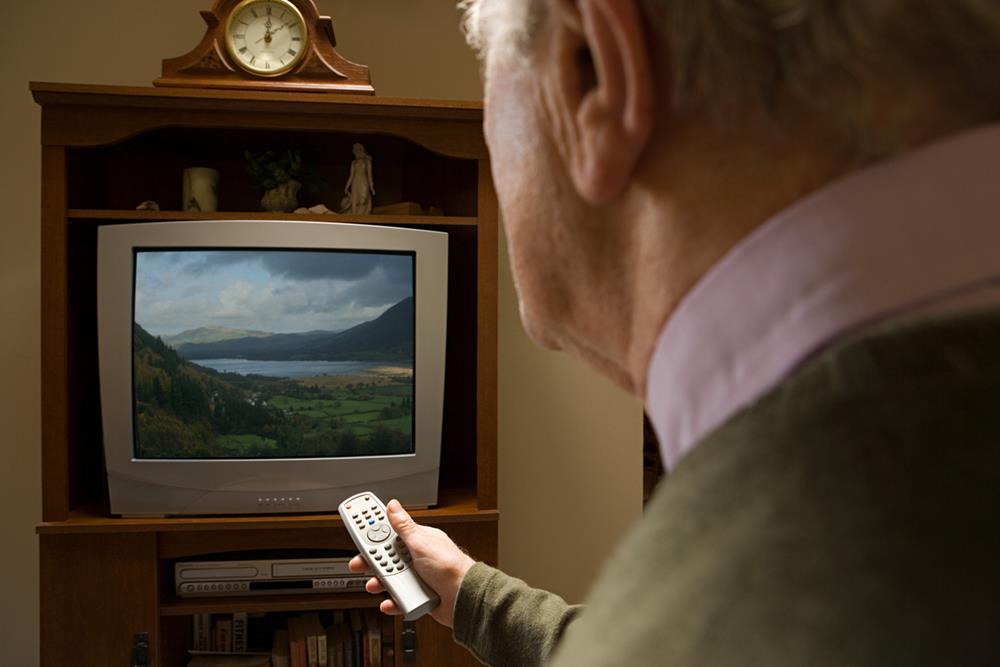
The invention of IR remotes facilitated channel surfing, a behavior that became synonymous with 1980s television culture. Viewers no longer felt bound to a single program; instead, they flipped channels with ease, fragmenting attention spans and forcing networks to adapt.
This cultural shift disrupted traditional advertising models and led to programming designed for shorter viewer engagement, reflecting society’s growing preference for immediacy and choice.
Three distinct behaviors defined American living rooms in the 1980s: the awkward family photo, the TV dinner, and most transformatively, channel surfing.
Viewstar’s Breakthrough: The Canadian Remote That Conquered Cable
In 1980, Canadian engineer Paul Hrivnak and his company Viewstar created an IR remote control for cable TV boxes. Sold via partners like Philips for approximately $190 CAD, the device addressed frustrations with older ultrasonic models and became a key accessory as cable television expanded.
The inclusion of a numeric keypad allowed users to access multi-digit channels seamlessly, a critical feature in dense urban markets like New York City where cable adoption surged.
From One Button to Many: The Evolution of Remote Functions
By the mid-1980s, remote controls had evolved from simple channel-changers into multi-function devices. New designs featured numeric keypads, dedicated buttons for VCRs, CD players, and teletext navigation.
However, this complexity also introduced challenges. Many households struggled with “remote overload” as each entertainment device required its own controller. This problem laid the groundwork for universal remote innovation later in the decade.
The simple, three-button TV remote of the early 1970s evolved into a sophisticated command center by the mid-1980s, reflecting television’s rapid technological advancement.
While these devices were evolving, Casio Databank watches were incorporating calculator and memory storage functions into wristwatches throughout the 1980s.
The Universal Remote Dream: Wozniak’s CORE and Its Competitors
In 1987, Steve Wozniak’s company CL 9 released the CORE remote, the first programmable universal remote. Leveraging microprocessors similar to those in the Apple II, the CORE allowed users to program macros and control multiple devices from a single unit.
While groundbreaking, its complexity and high price limited its appeal. Simpler competitors like Acoustic Research attracted wider audiences. Despite CL 9’s closure in 1988, the CORE pioneered concepts that became standard in later universal remotes.
Teletext Revolution: How Remotes Transformed Interactive TV
Teletext services, including the BBC’s Ceefax and ITV’s Oracle, flourished during the 1980s. By 1985, over 2 million UK households owned teletext-capable TVs, which allowed viewers to access on-demand information like news and sports by inputting three-digit codes on their remotes.
This marked one of the earliest forms of interactive television, anticipating features of the internet age.
The Living Room Arms Race: Multiple Devices, Multiple Remotes
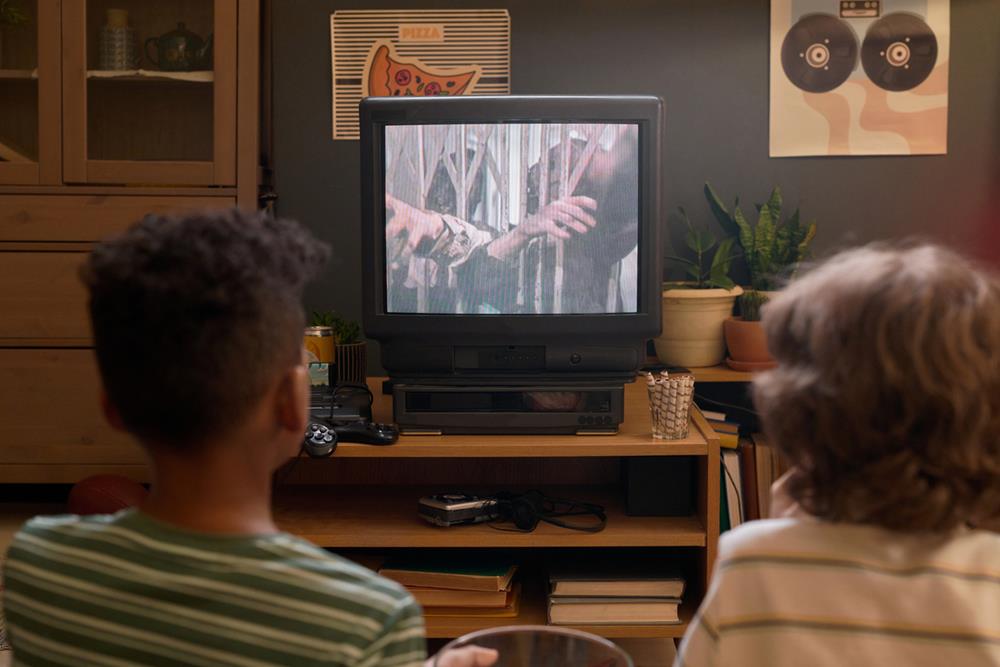
The 1980s explosion of entertainment devices—VCRs, cable boxes, and stereos—left living rooms cluttered with multiple remotes. Infrared technology required line-of-sight operation, and misplaced controllers became a daily frustration.
By the late 1980s, universal remotes began to emerge, offering a partial solution to this growing complexity.
Forgotten Heroes: Engineers Behind The Couch Potato Lifestyle
Pioneers like Eugene Polley, inventor of the 1955 Flash-Matic, and Robert Adler, creator of the 1956 ultrasonic Space Command, laid the foundation for remote control innovation. In 1997, both were awarded an Emmy recognizing their contributions to wireless control technology.
Their work enabled the seamless interaction with television systems that viewers now take for granted.
Remote Control Psychology: How Button-Pushing Changed Viewer Habits
The remote control’s impact extended beyond convenience. The ability to change channels instantly created a reward loop, fostering shorter attention spans and driving demand for faster-paced programming.
Viewers shifted from passive recipients of content to active participants in their entertainment experience, fundamentally transforming how media was produced and consumed.
Emmy-Winning Technology: The Legacy of 80s Remote Innovations
The transition from ultrasonic to infrared (IR) technology during the 1980s not only standardized remote design but also laid the groundwork for innovations that continue to shape modern entertainment systems. Infrared became the global standard for remote control communication, influencing everything from televisions to air conditioners and even early home automation systems.
These 1980s breakthroughs gave rise to universal remote controls, which consolidated the growing number of devices in households. This early attempt at integration anticipated the smart home ecosystems of today, where smartphones and voice assistants like Alexa and Google Assistant perform functions once limited to handheld remotes.
Modern remotes retain the DNA of these pioneering designs, even as they evolve into gesture-based controllers, voice-command systems, and smartphone apps. The 1980s innovations effectively rewired the relationship between humans and media, transforming passive viewers into active content navigators.
Without this era’s technological strides, today’s on-demand streaming, interactive gaming, and smart TVs would not exist in their current forms. The 1980s remote control revolution not only altered how people watched television but also influenced broader trends in user interface design and human-computer interaction for decades to come.