

War in Korea
The Korean War began in 1950 when North Korea invaded South Korea. The United States led a UN force supporting South Korea, while China and the Soviet Union backed North Korea. The conflict ended in 1953 with a stalemate and divided peninsula. This war marked the first major Cold War clash between communist and capitalist powers.
Conflict in Vietnam

In the 1950s, Vietnam was split between the communist North and the non-communist South. The U.S. started supporting South Vietnam to prevent communist expansion. This involvement grew into the Vietnam War in the 1960s. The conflict had far-reaching impacts on American society and politics.
Eastern European Alliance
In 1955, the Soviet Union and seven Eastern European countries signed a mutual defense treaty called the Warsaw Pact. This alliance was formed in response to West Germany joining NATO. It formalized the division of Europe into competing Cold War blocs.
Uprising in Hungary

In 1956, Hungarians revolted against Soviet control. Protests spread across the country and briefly toppled the communist government. The Soviet Union crushed the uprising with military force. Thousands died in the fighting. The failed revolution exposed cracks in Soviet rule over Eastern Europe.
Group of Neutral Nations
Many newly independent countries wanted to avoid aligning with either the U.S. or Soviet camps. In 1955, leaders from Asia and Africa met in Indonesia to form the Non-Aligned Movement. This group aimed to stay neutral in the Cold War while advocating for decolonization.
Growing Nuclear Danger
Both the U.S. and Soviet Union raced to build more powerful nuclear weapons in the 1950s. They developed hydrogen bombs far stronger than atomic bombs. The threat of nuclear war loomed over international relations. Many feared these weapons could destroy human civilization.
New Monarchs Take the Throne
Several European countries saw royal transitions in the 1950s:
- Elizabeth II became Queen of the United Kingdom in 1952
- Baudouin became King of Belgium in 1951
- Gustav VI Adolf became King of Sweden in 1950
African Independence Movement
The 1950s marked the start of widespread decolonization in Africa:
- Libya gained independence from Italy in 1951
- Morocco and Tunisia broke from French rule in 1956
- Ghana became the first sub-Saharan African nation to gain independence in 1957
U.S. Presidential Leadership

Dwight D. Eisenhower was elected president of the United States in 1952 and re-elected in 1956. As a war hero, he brought military experience to the White House during the early Cold War years. Eisenhower focused on containing communism abroad while pursuing moderate domestic policies.
Presidential Term Limits
The 22nd Amendment to the U.S. Constitution was ratified in 1951. It limited presidents to two four-year terms in office. This change formalized the tradition started by George Washington of serving only two terms as president.
Soviet Leadership Changes
Joseph Stalin died in 1953 after nearly 30 years ruling the Soviet Union. A power struggle followed. Nikita Khrushchev emerged as the new Soviet leader by 1955. He introduced some reforms and pushed for “peaceful coexistence” with the West.
British Prime Ministers
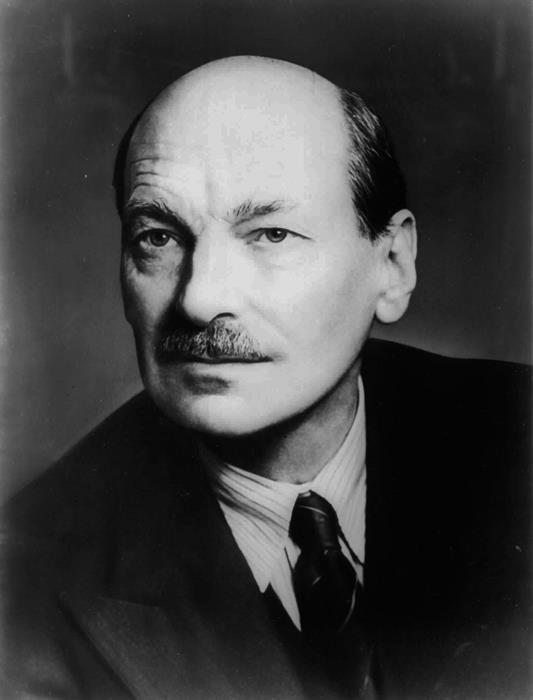
The United Kingdom had four different prime ministers in the 1950s:
- Clement Attlee (Labour Party): 1945-1951
- Winston Churchill (Conservative Party): 1951-1955
- Anthony Eden (Conservative Party): 1955-1957
- Harold Macmillan (Conservative Party): 1957-1963
New U.S. States
Two new states joined the United States in 1959:
- Alaska became the 49th state on January 3
- Hawaii became the 50th state on August 21
This was the first expansion of the U.S. since 1912.
U.S.-Soviet Kitchen Debate

In 1959, U.S. Vice President Richard Nixon and Soviet leader Nikita Khrushchev had an impromptu debate at an American exhibition in Moscow. Standing in a model kitchen, they argued about the merits of capitalism vs. communism. The exchange highlighted Cold War tensions.
U.S. Immigration Law
The Immigration and Nationality Act of 1952 kept national origin quotas limiting immigration. It also:
- Ended Asian exclusion
- Set preferences for skilled workers and family reunification
- Allowed the government to deport immigrants suspected of communist ties
Racial Laws in South Africa
South Africa’s white-minority government passed laws in the 1950s to enforce racial segregation:
- Population Registration Act (1950): Classified people by race
- Group Areas Act (1950): Forced racial segregation in housing
- Bantu Education Act (1953): Created separate, inferior schools for black students
These laws formed the legal basis for apartheid.
Steps Toward Desegregation
The U.S. took steps to end racial segregation in the 1950s:
- Brown v. Board of Education (1954): Supreme Court ruled school segregation unconstitutional
- Montgomery Bus Boycott (1955-1956): Challenged segregation on public buses
- Civil Rights Act of 1957: First civil rights law since Reconstruction
Revolution in Cuba
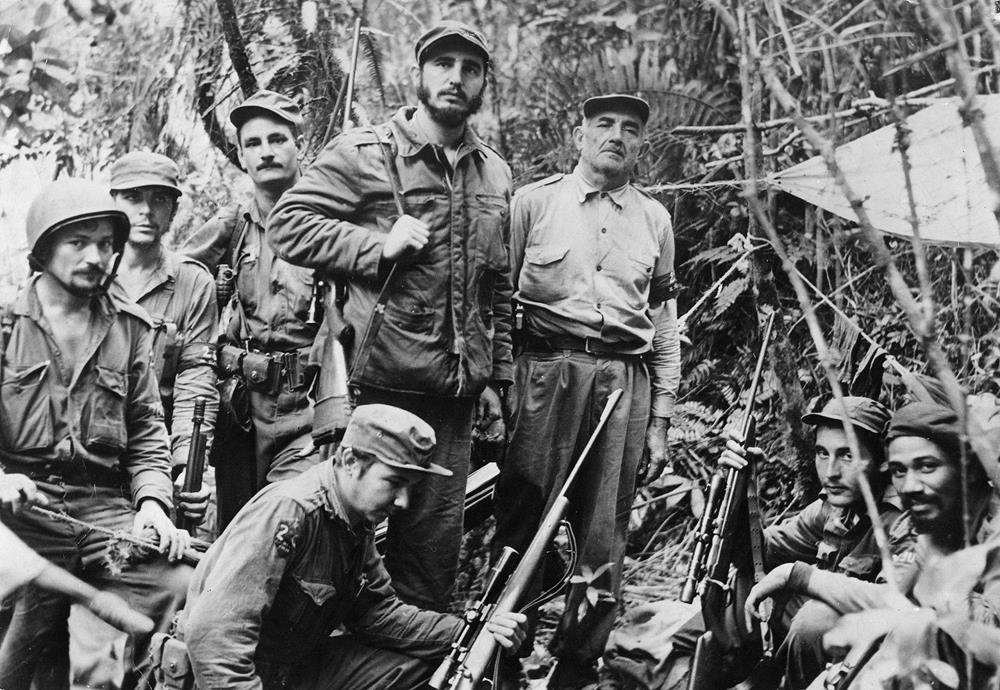
In 1959, Fidel Castro led a revolution that overthrew Cuba’s U.S.-backed dictator. Castro allied Cuba with the Soviet Union and established a communist government. This brought the Cold War to America’s doorstep.
Middle East Defense Pact
In 1955, the U.S. helped create the Baghdad Pact, a defense agreement between Iraq, Iran, Pakistan, Turkey and the UK. It aimed to contain Soviet influence in the Middle East. The pact was renamed CENTO after Iraq withdrew in 1959.
Japan Regains Independence
The U.S. occupation of Japan ended in 1952 with the signing of the San Francisco Peace Treaty. Japan regained its sovereignty but remained closely allied with the U.S. The American military kept bases in Japan.
Tibet Under Chinese Control
China’s communist government sent troops into Tibet in 1950. By 1951, Tibet was fully under Chinese control. The Dalai Lama, Tibet’s spiritual leader, initially worked with Chinese authorities but later fled to India in 1959.
European Economic Integration
In 1957, six Western European countries signed the Treaty of Rome, which created the European Economic Community, a common market. This was a major step toward European integration and laid the groundwork for today’s European Union.
Conclusion
1950 was a decade of immense significance. The decisions made and the conflicts fought during these years have had lasting impacts, shaping the geopolitical landscape of the world we live in today. This was a time when the world was redefined, boundaries were redrawn, and the seeds of both cooperation and conflict were sown.