

The way we consume television has undergone a radical transformation. What began as a convenient alternative to cable has evolved into a dominant global force, fundamentally altering how stories are told and how we spend our evenings. As of early 2026, looking back at the data from 2025, the “Streaming Era” is no longer the future—it is the definitive present.
1. The Great Cable Exodus: By the Numbers
For decades, the “bundle” was king. Today, it is being dismantled by a massive wave of cord-cutting. High costs and the lack of flexibility have pushed consumers toward a “streaming-first” lifestyle throughout 2025.
- Market Dominance: In late 2025, streaming viewership reached a historic milestone, accounting for 47.5% of all TV usage, officially eclipsing the combined share of broadcast (21.4%) and cable (20.2%).
- The Cord-Cutting Surge: By the end of 2025, an estimated 80.7 million U.S. households were classified as cord-cutters or “cord-nevers,” compared to just 54.3 million traditional Pay-TV households.
- Generational Divide: Less than 21% of Gen Z viewers still utilized traditional cable or satellite services as of last year.
Table: Why Viewers Cut the Cord in 2025
| Reason for Switching | Percentage of Users |
| High Cost of Cable | 86.7% |
| Preference for On-Demand Viewing | 39.7% |
| Desire for Binge-Watching | 15.9% |
| Moving/Lifestyle Change | 13.0% |
2. The Binge-Watching Phenomenon
“Binge-watching” shifted from a weekend luxury to a standard consumption habit in 2025. Streaming platforms have perfected the art of the “cliffhanger,” designed to keep viewers engaged for hours.
- The “Comfort Show” Factor: Interestingly, the most-watched content in 2025 wasn’t always new. Established hits like NCIS, Grey’s Anatomy, and Bluey continued to dominate, with Bluey alone clocking over 137 billion minutes of viewing time.
- Original Powerhouses: 2025 saw massive engagement for originals like Stranger Things (Netflix), Andor (Disney+), and The Pitt (Max).
- Single-Day Records: Christmas Day 2025 became the most-streamed day in history, with 55.1 billion viewing minutes, largely driven by the NFL on Netflix and high-profile series releases.
3. The Resurrection of Reality TV
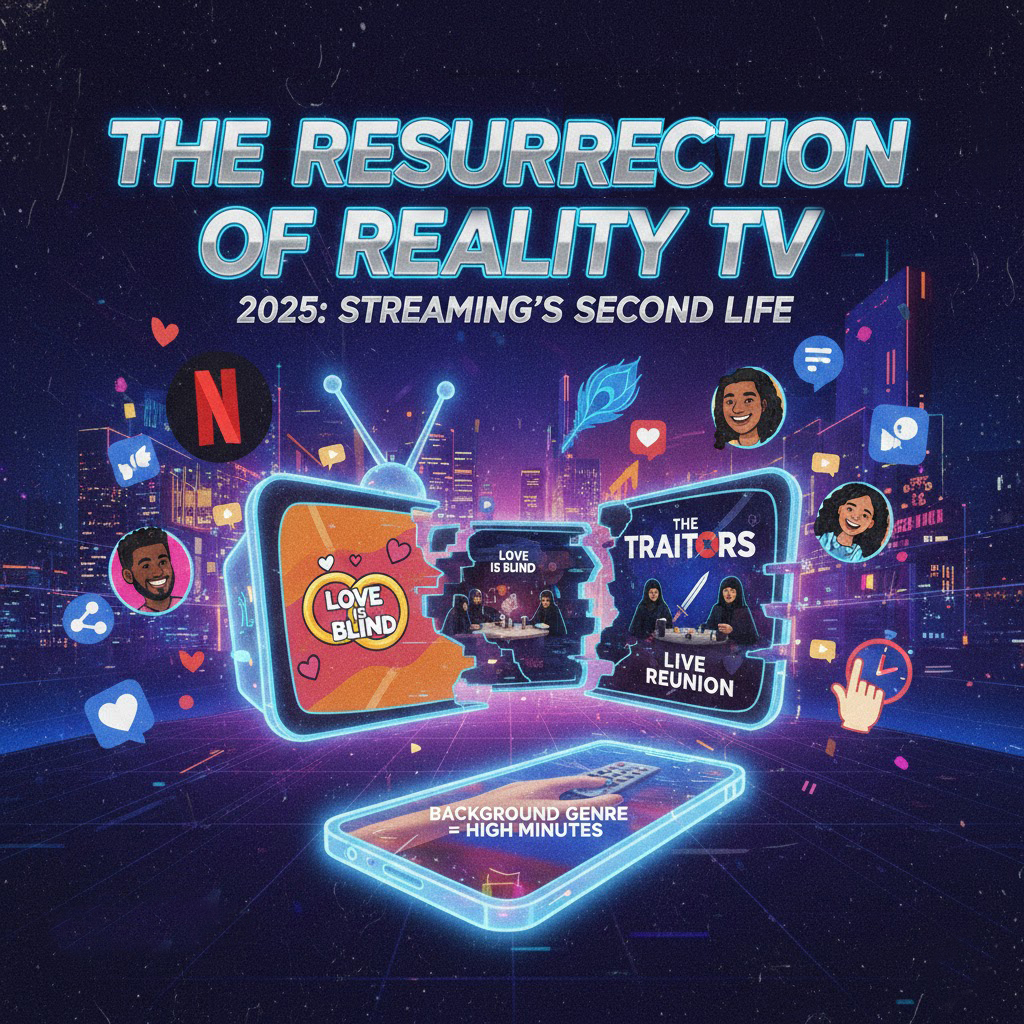
Once thought to be a relic of linear TV, reality programming found a massive second life on streaming throughout 2025. Because reality TV is cheaper to produce and highly “meme-able,” platforms doubled down on the genre.
- Platform Staples: Series like Love Is Blind (Netflix) and The Traitors (Peacock) became cultural touchpoints that drove massive social media engagement last year.
- The “Live” Factor: Streamers increasingly added live reality components—such as live reunions or voting—to mimic the “appointment viewing” feel of traditional TV.
- Engagement: Reality TV remains the top “background” genre, with viewers often keeping these shows on while multi-tasking, contributing to high total viewing minutes.
4. Netflix vs. Disney+: The 2025 Battle of the Titans
The “Streaming Wars” narrowed down to a few major players in 2025, each employing distinct strategies to capture the market.
Comparison of the “Big Two” (Year-End 2025 Data)
| Metric | Netflix | Disney+ / Hulu |
| Global Subscribers | ~325 Million | ~195 Million (Combined) |
| Core Strength | Global original content & UI | Massive IP (Marvel, Star Wars, Pixar) |
| Ad-Tier Growth | 94M+ Monthly Active Users | ~35% of new subs choosing ads |
| Live Strategy | NFL, WWE, Live Specials | ESPN+ Integration & Sports Bundles |
Key Trend: In 2025, both giants shifted focus from “subscriber growth at all costs” to profitability. This led to the crackdown on password sharing and the aggressive rollout of ad-supported tiers.
5. The Future: Consolidation and Live Sports
As we move through 2026, the landscape is shifting toward a “Re-bundling” phase based on the momentum of the previous year.
- Live Sports is the Final Frontier: Streaming services are now the primary homes for major sporting events. Amazon Prime (Thursday Night Football) and Netflix (NFL Christmas games in 2025) have proven that the biggest “must-watch” moments no longer happen on cable.
- The Rise of FAST: Free Ad-Supported Streaming TV (like Tubi, Pluto TV, and The Roku Channel) boomed in 2025, capturing nearly 6% of total TV viewing.
- Subscription Fatigue: The average consumer now subscribes to 3.4 services, leading to a trend of “churning”—subscribing for one show and canceling immediately after.
Conclusion
The shift from cable to streaming is effectively complete. We have moved from a world of scheduled broadcasts to an era of total viewer autonomy. Whether you’re binging a 10-episode drama in one sitting or catching a live NFL game on your laptop, the screen has never been more personal—or more crowded.