

There was a time when the commute was universally despised. It was the tax you paid for employment: headphones in, eyes half-open, counting stops until you reached your desk. The goal wasn’t pleasure but efficiency, survival and dissociation.
Then hybrid life happened. Suddenly, the commute wasn’t five days a week—it was two. Or three. Or “as needed.” And when something stops being constant, it stops being background noise. It becomes a choice, a marker, and a scene. In 2026, the commute isn’t just transportation. It’s ritual—one of the few remaining stretches of time that belongs to neither your home life nor your work life.
Hybrid Life Didn’t Just Change Schedules—It Changed the Psychology
The biggest shift isn’t logistical – it’s mental. When you commute every day, it becomes a grind you endure. When you commute a few days a week, it becomes a transition you prepare for. You start noticing it again. Hybrid life also broke the old boundary between “work” and “not work.” In fully remote routines, the transition from bed to work is basically a laptop opening. You can go from sleep to Slack in under five minutes, which sounds efficient until you realize what it removes: the buffer.
Office days reintroduced something we didn’t realize we needed: a physical bridge between identities. You don’t just show up to your job—you move toward it. You put on an outfit with structure. You carry a bag that means “public version of me.” You become someone who’s leaving the house for a reason. That identity shift is subtle, but it’s powerful. When the commute becomes occasional, it starts functioning like a ceremony: this is the start of the episode.
Dead Time Became Designated Time
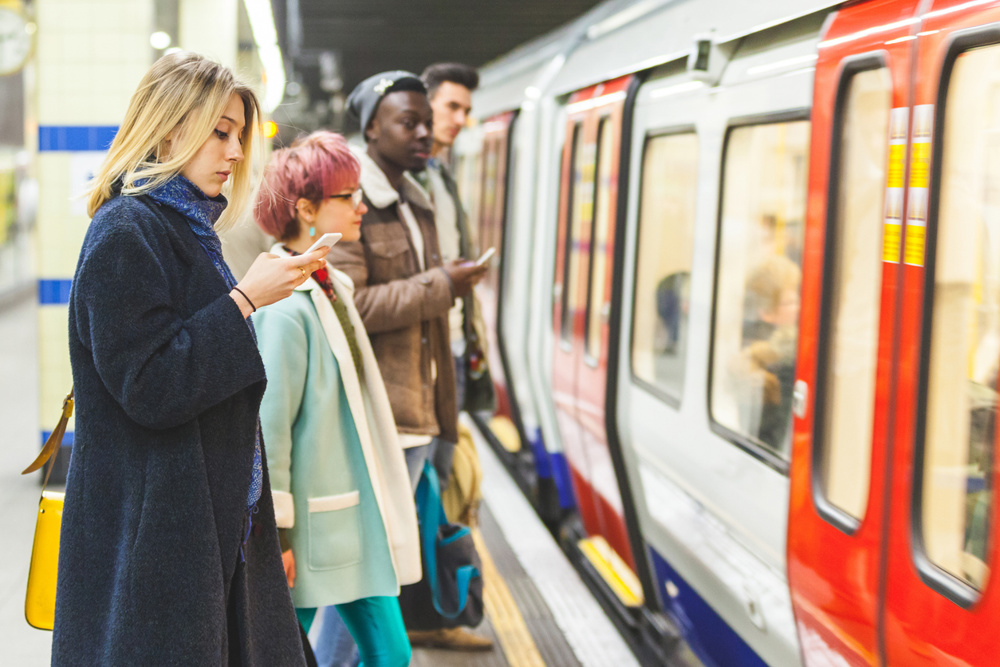
Pre-hybrid, commuting felt like wasted minutes. It belonged to neither home nor work, so it had no identity of its own. The only goal was to get through it as fast as possible. In 2026, that same stretch of time is being reclaimed. Not because trains got more comfortable or traffic disappeared, but because fewer commutes made the commute feel like it could hold meaning again. Designated time looks like this:
- You pick the podcast before you leave, so you’re not doom-scrolling at the platform.
- You save certain playlists only for office days, like a theme song you don’t want to dilute.
- You read on the train because it’s one of the only places you can read without feeling guilty you’re not “being productive.”
- You use the walk from the station to the building to rehearse your day—or to let your brain arrive slowly.
This is the core of the trend: the commute becomes one of the last “unassigned” pockets of your day. And when everything else is optimized, unassigned time starts to feel like luxury.
The Main Character Commute Is Real, and Pop Culture Made It Inevitable
The commute renaissance didn’t happen in a vacuum. Pop culture trained us to think in scenes. In 2026, the internet loves formats that turn ordinary routines into stories: “office day” vlogs, commute POVs, GRWM-to-work reels, outfit checks filmed in elevator mirrors. “What’s in my work bag” breakdowns, and those quiet shots of a coffee cup in one hand while the other hand pushes through a subway gate. Even the captions tell us: Tuesday in-office. Back in my commuter era. I missed this.
The commute becomes cinematic because it’s visually perfect for storytelling. It has movement, a beginning, a destination, and built-in mood. The city looks different when you’re walking through it with purpose. The morning light hits glass buildings like an establishing shot. Your coat moves in the wind like a wardrobe department earned their paycheck.
And because we’ve all absorbed “main character energy” as a cultural language, the commute naturally becomes the opening sequence: the music swells, the montage starts, and suddenly you’re not just going to work—you’re entering the world.
Transitional Space, Transitional Identity
The commute is inherently liminal. It’s not home, not work, not fully private, not fully public. And in 2026, liminal spaces are having a cultural moment because they solve a modern problem: we’re overloaded. When your day is compressed into back-to-back tasks and constant notifications, you lose the ability to transition. Everything bleeds together. You finish one thing and immediately start another.
Your brain never fully arrives anywhere. The commute, by design, forces arrival. It’s one of the only routines left that requires you to be in motion without producing something. You can’t multi-task as aggressively while walking through a station. You can’t fully optimize waiting for a train. There’s a built-in pause.
Why This Feels So 2026: Intentional Friction and the Anti-Optimization Mood
A lot of 2026 culture is a reaction to frictionless living. We’re tired of everything being instant: tap to order, tap to deliver, tap to join, autoplay everything, let an algorithm decide what you want. The commute reintroduces friction: walking, waiting, sitting, moving slowly through space. It’s not always convenient, but it’s grounding. It’s one of the rare moments where your attention isn’t being monetized by design.
This is why romanticizing commute fits neatly into the broader 2026 mood you’ve been circling in your other pieces: analog luxury, intentional friction, presence culture. The commute is friction you didn’t choose originally—but in a hybrid world, you can choose how you hold it. You can make it punishing, or you can make it a buffer. And the culture is choosing a buffer.
The Soundtrack Effect: Music as a Bridge Between Selves
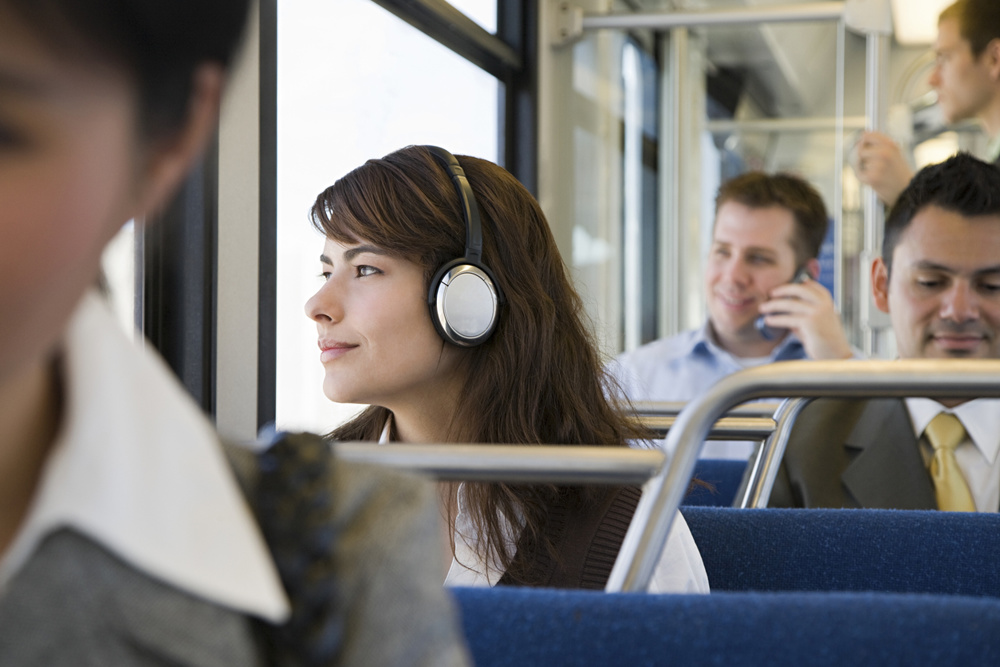
If there’s one reason the commute became cinematic, it’s music. The minute headphones go in, the city becomes edited. A “train platform playlist” does something an at-home playlist doesn’t: it attaches sound to movement. A three-minute track becomes a bridge between versions of you. It gives your body a pace. It gives your mind a tone.
That’s why office-day playlists are having their own mini-era. People aren’t just listening—they’re scoring their lives. In a culture that thinks in mood boards and chapters, the commute is the easiest place to build a soundtrack because the scene is consistent: morning motion, city light, a destination, a self you’re stepping into. You can’t get that same feeling from walking to your kitchen.
Coffee as Ceremony, and the Return of Small Stops
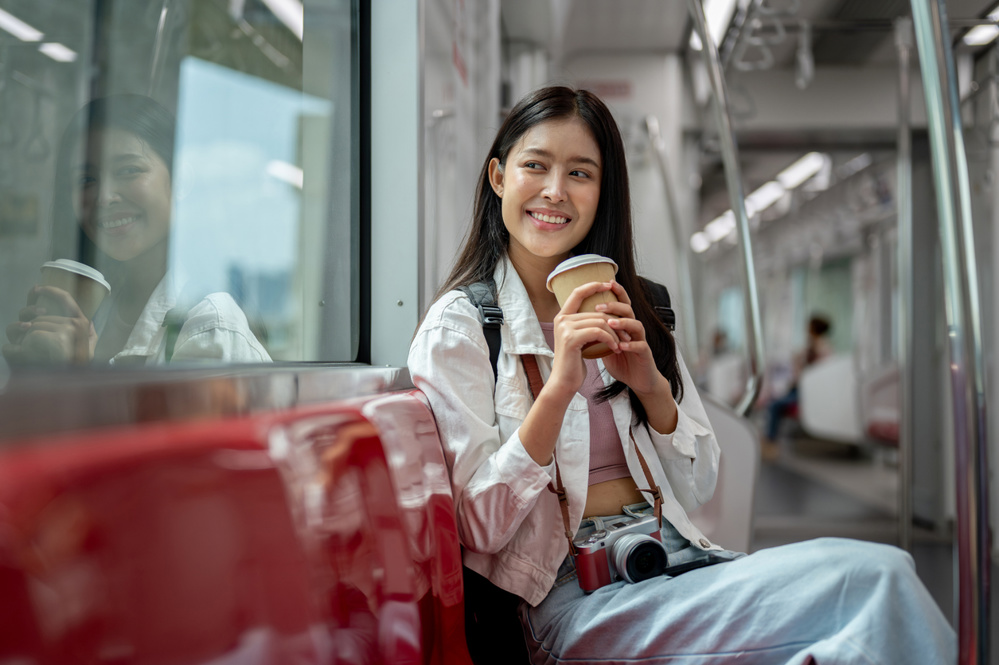
The modern commute often includes a stop that’s technically unnecessary but emotionally essential. A café. A bakery. A matcha counter two blocks out of the way. That stop is how you transform commuting from obligation into ritual. You’re not rushing. You’re participating. The coffee cup becomes a prop, yes—but it also becomes an anchor. It tells your brain: this day is different. It marks the episode.
In pre-hybrid life, that coffee might have blurred into routine. Now, because office days are less frequent, it feels deliberate. And deliberate is what 2026 keeps chasing: not more productivity, but more meaning.
The Commute as Thinking Time—and the Return Trip Glow
Remote life can be efficient, but it can also be psychologically abrupt. You can roll from sleep to meeting to meeting with no in-between. The commute restores buffer time on both ends. On the way in, it’s when you:
- process yesterday
- rehearse a conversation
- draft an idea mentally
- decide what matters today
On the way home, it’s a decompression chamber. The city moves past you. The day settles. You don’t have to perform for anyone. You’re in transition again, which means you can let things go. That’s why the evening commute has its own glow. Not because you love crowded trains, but because you get a clean ending. You get a boundary. You get to leave work somewhere outside your home. In 2026, that boundary is priceless.

Is This Just Romanticizing Labor?
It’s a fair question. Commutes can be miserable. Delays are real. Crowds are real. And not everyone has the privilege of hybrid flexibility—many people still commute daily, not as a ritual but as necessity. But romanticization isn’t about pretending commuting is fun. It’s about reclaiming the transitional time that used to feel stolen. Hybrid life made commuting rarer for some people, and that rarity created room to reframe it.
The point isn’t the traffic. The point is the buffer you can control: the playlist, the book, the coffee, the decision to treat the in-between as yours. This trend isn’t about glamorizing exhaustion. It’s about making meaning where meaning is possible.
Conclusion
The commute will never be perfect. There will always be delayed trains and crowded sidewalks and mornings when you’d rather stay in bed. But in 2026, it’s no longer just dead time. It’s the bridge between identities. The soundtrack moment. The small ceremony that turns a workday into a scene instead of a blur. Hybrid life didn’t eliminate commuting—it gave it shape. And when so much of modern life feels compressed and optimized, the simple act of moving through the world—slowly, intentionally, with a good song in your ears—feels quietly powerful.